012:30 in the morning
The fire started in the basement. The floor below held Gillis & Geoghegan, a firm that made steam pipe fittings. The floors and walls were soaked in machine oil. The night watchman, John Mahoney, went down to tend the boiler fire and came back 10 minutes later to find flames climbing the office wall. He threw water on them; it did nothing.
By the time the fire brigade arrived, the fire was moving up the stairwell and the elevator shaft through the whole building. It took 3 hours to put out, and it reached the elevated railway structure on Sixth Avenue. It did not spread to the box factory next door. The all-out signal sounded at 8 am.
02What was in that room
Tesla's laboratory occupied the entire 4th floor. It held more than 400 pieces of apparatus built while he worked on high-frequency current and polyphase alternating current: the large coils used in his lectures, a new generator close to commercial production, hundreds of experimental models, drawings, notebooks and photographs.
The 4th floor collapsed into the 2nd. The apparatus was crushed into unrecognisable shapes. The loss was estimated at about $50,000, and there was no insurance.
He later recalled: “Fairfield Osborn, the curator of the museum, came to the laboratory and asked me: ‘Why on earth do you keep these things here?’ Those 400 pieces were priceless. He offered to move them to the museum, I did not take his advice, and they were lost.”
03“What can I say”
The next morning the staff came to work and found their jobs gone. None of them could bring themselves to tell him. Tesla appeared at 10 am as usual and saw it himself.
At first he was stunned. “It cannot be true!” he said, walking back and forth in front of the ruins. To a reporter he said:
“I am in too much grief to talk. What can I say? The work of half my lifetime, machine tools and scientific instruments that took years to complete, swept away by a fire of 1 to 2 hours. How can the loss be calculated in dollars and cents? Everything is gone. I must begin over again.”
— newspaper report, 14 March 1895
The paper that day recorded that there were tears in his eyes as he spoke.
046 hours later
And yet that same afternoon he was already working. The electrical journal of the time reported: “He was at first greatly shocked, but he bore up calmly, and within 6 hours had prepared and sent out the designs for the rebuilding of a new oscillator.”
The oscillator was soon running again, lighting the laboratory and supplying current to new experiments. He took a new laboratory at 46 East Houston Street. Almost nothing had been saved from the fire, but he could draw it again from memory.
When Roentgen announced X-rays that December, Tesla sent him the ‘shadow photographs’ he had salvaged from the fire. Before the fire he had been photographing with a Crookes tube, and did not then understand why a portrait of Mark Twain came out mottled. Later he learned that it was the metal shadow of a camera screw. Lost apparatus could be rebuilt. The lost records came back only in part.
The work of half my lifetime
swept away by a fire
of 1 to 2 hours.
Everything is gone. I must begin over again.
05What did not burn
Tesla brought the fire up again later in life. He was said to have an extraordinary memory. The drawings that vanished could be redrawn from memory, and the photographs retaken.
In 1898 he showed a wirelessly controlled boat at Madison Square Garden. In 1899 he went to Colorado Springs for large-scale discharge experiments. What the fire took was the order of the work he meant to do, not its direction.
We remember him as an inventor. What he showed on 13 March 1895 was not invention but recovery: sitting down at a desk the same afternoon of a morning that left nothing.
What burned was the record.
What remained was the method.
6 hours after the fire, Tesla was drawing a new oscillator design.
The card line and this story's link are sent together
One story a day,
in your inbox
Stories like this, 1 each morning. No advertising, a 5-minute read.
You can unsubscribe with 1 click at any time.
Source notes · 5 references and image notice
- ‘Mr. Tesla’s Great Loss’, newspaper report of 14 March 1895 (reproduced by Tesla Universe) — the $50,000 loss, no insurance, “I am in too much grief to talk”. https://teslauniverse.com/nikola-tesla/articles/mr-teslas-great-loss
- Electrical Review, ‘Destruction of the Tesla Laboratory by Fire’, 20 March 1895 (reproduced by Tesla Universe) — point of origin, night watchman, 3 hours of firefighting, rebuild designs 6 hours later. https://teslauniverse.com/nikola-tesla/articles/destruction-tesla-laboratory-fire
- Electrical Review, ‘Tesla’s Laboratory Burned’, April 1895 (reproduced by Tesla Universe) — 33-35 South Fifth Avenue, destroyed. https://teslauniverse.com/nikola-tesla/articles/teslas-laboratory-burned
- Tesla Universe chronology, ‘5th Ave. Lab Burns’ — the whole 4th floor, more than 400 pieces of apparatus, $50,000. https://teslauniverse.com/nikola-tesla/timeline/1895-tesla-loses-fifth-avenue-lab-fire
- Open Tesla Research, ‘Laboratories in New York (1889-1902)’ — Osborn's recollection, the new laboratory at 46 East Houston Street, the X-ray shadow photographs. https://teslaresearch.jimdofree.com/labs-in-new-york-1889-1902/
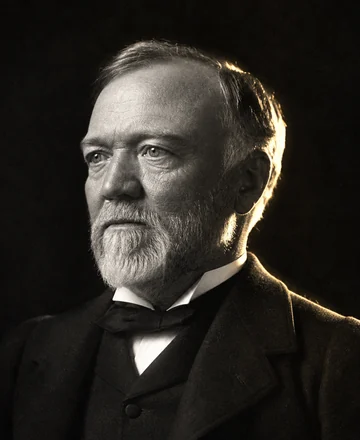
The time of the fire is given as either ‘2:30’ or ‘between 2 and 3’ in the sources; the text follows the 2:30 of the contemporary report. The $50,000 loss is Tesla's own estimate. The building is given as 6 storeys with the laboratory on the whole 4th floor, which differs from some accounts that describe ‘the top 2 floors’. The portrait is an AI-generated editorial image.